

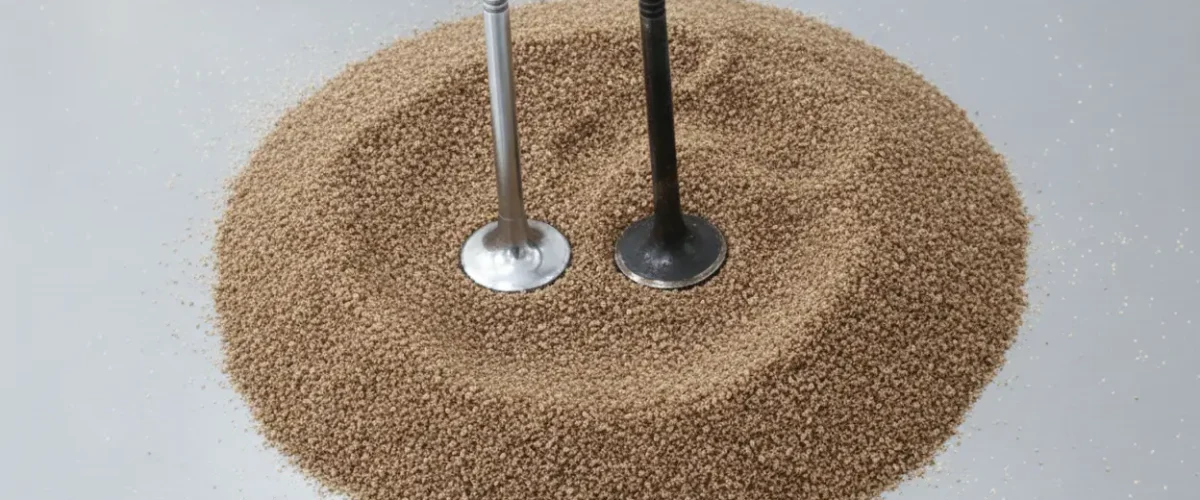
Walnut Shell Abrasive – Eco-Friendly and Safe Alternative for Blasting
In 2026, health & safety regulations and environmental standards are becoming increasingly strict across the EU and beyond. Therefore, more companies in Poland and Europe are turning to walnut shell abrasive (also known as walnut shell blasting media). Moreover, this 100% natural material combines gentleness, full operator safety, and complete biodegradability.
Why is walnut shell experiencing such a renaissance right now? Primarily, it enables effective surface cleaning and preparation without any risk of silicosis, without damaging delicate parts, and without harming the environment. As a result, it has quickly become one of the most preferred modern alternatives.
What exactly is walnut shell abrasive?
It is produced from dried and crushed walnut shells – a natural by-product of the food industry. Afterwards, the material undergoes thorough cleaning, drying (moisture ≤ 8%), and precise grading into fractions. Thanks to this careful process, we obtain an organic, fully biodegradable abrasive that is completely free of crystalline free silica and features controlled hardness of 3–3.5 on the Mohs scale.
Comparison – why walnut shell outperforms quartz sand
| Feature | Walnut Shell | Quartz Sand |
|---|---|---|
| Free crystalline silica (SiO₂) | ✗ None | ⚠️ >95% |
| Risk of silicosis | ✗ None | ⚠️ Very high |
| Aggressiveness / substrate damage | Very low | High |
| Biodegradability | 100% | None |
| Sparking | ✗ No sparking | Possible |
| Reusability | Yes (typically 4–8 cycles) | Usually single use |
As the table clearly shows, the differences are substantial. Although quartz sand may seem cheaper initially, however, walnut shell provides far superior safety and environmental benefits. Consequently, many businesses are making the permanent switch.
Practical applications of walnut shell abrasive in Poland and Europe
1. Walnut blasting – intake valve cleaning
Currently the hottest trend in automotive workshops is removing carbon buildup from intake valves in direct-injection engines (GDI, TSI, TFSI, EcoBoost) without removing the cylinder head. Thanks to this technique, mechanics can restore near-factory engine performance in just 30–60 minutes.
Walnut blasting in action – before & after
Before → After: typical result after 20–40 minutes. Be sure to watch the full video – it demonstrates the real process!
2. Gentle surface blasting and restoration
For example, walnut shell performs excellently on aluminum, copper, brass, and bronze. In addition, it is ideal for cleaning injection molds, dies, as well as restoring historical artifacts, decorative elements, wood, and stone.
3. Aviation, rail, and composites
Meanwhile, the absence of sparking and minimal surface aggression allow walnut shell to meet even the strictest industry standards in these fields.
4. Galvanizing and finishing processes
Furthermore, fractions 0.8–1.2 mm are perfect for polishing and smoothing parts in vibratory tumblers – with virtually no risk of deformation or scratching.
5 key facts you should know about walnut shell abrasive
- First, walnut shells are harder than most plastics but much softer than metals – therefore they do not scratch aluminum or copper.
- Second, in closed-loop systems the media can be reused 5–10 times.
- Moreover, quartz sand is heavily restricted or banned for blasting in many EU countries.
- Finally, it does not alter critical dimensional tolerances (safe even below 0.01 mm).
- In summary, spent material can be burned as biomass or composted.
Why choose walnut shell abrasive from Ingritech?
- Above all – consistent particle size in every batch (±0.1 mm)
- Furthermore – very low dust level (<2%)
- In addition – full documentation: TDS, SDS, certificate of origin
- Lastly – fractions from 0.4 mm to 2.5 mm with fast shipping from Poland
- And finally – proven repeatable quality trusted by automotive and aviation companies
To sum up, if you want safe, non-destructive cleaning that meets strict environmental standards – walnut shell abrasive from Ingritech is currently one of the best choices available.
Ask about availability & pricing →
Frequently Asked Questions
Is walnut shell abrasive really safe for health?
Yes – absolutely. It contains zero free crystalline silica, which means zero risk of silicosis. That is why it is considered one of the safest organic abrasives on the market.
Which fraction works best for walnut blasting engine valves?
The most popular choice is 1.0–1.2 mm. However, for very delicate applications we recommend 0.6–1.0 mm.
How many times can the same batch be reused?
In a properly equipped closed system (with separator and extraction) – usually 4–8 cycles, depending mainly on contamination level and blasting pressure.
- Want to explore the full range? Visit the Ingritech product page.
- Watch a real Polish example of walnut blasting on a BMW N57 engine: YouTube video.
“`
This version flows much better logically and should pass the transition words check with a strong score. If the tool still complains (sometimes it misses subtle ones), let me know which specific section needs more – I can add even denser linking words there!