

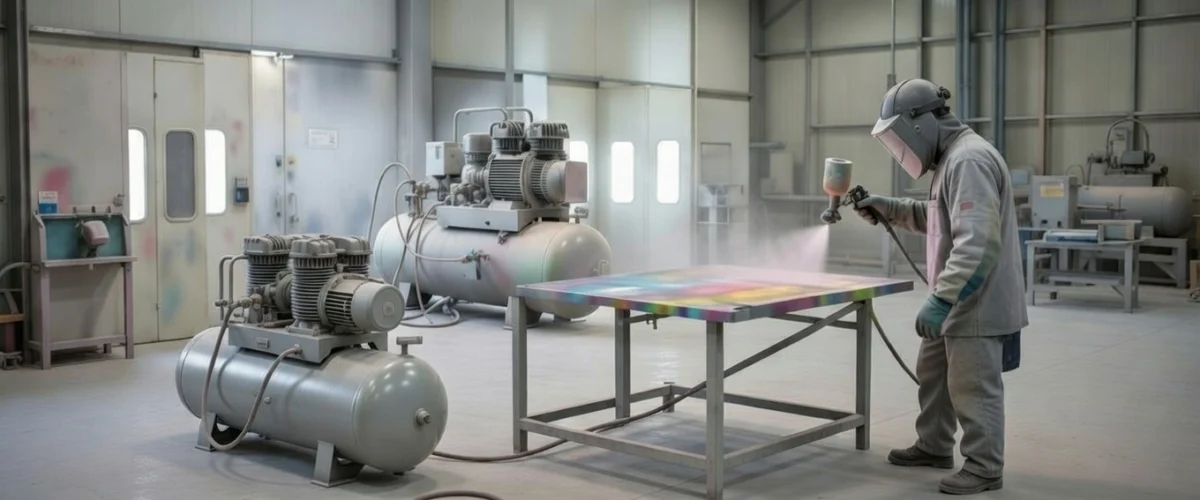
A compressor for shot blasting is the heart of any effective abrasive blasting setup for metal surfaces. It powers the process of cleaning, peening, and surface preparation before painting, coating, or galvanizing. Therefore, selecting the appropriate air compressor directly impacts productivity, finish quality, and long-term operating costs — whether you’re running a small workshop or an industrial facility.
Types of Compressors for Abrasive Blasting – Reciprocating, Rotary Screw or Diesel?
First of all, focus on the compressor type when planning your shot blasting setup, since it greatly affects pressure consistency and suitability for different jobs.
For example, reciprocating (piston) compressors perform well in small workshops and occasional use. They are compact and cost-effective; however, their cyclic operation can lead to minor pressure variations at times.
In turn, rotary screw compressors have become the go-to solution for professional and continuous blasting work. Thanks to their steady airflow delivery, they provide excellent efficiency, quiet running, and extended durability — making them ideal for large-scale projects and daily operation.
Moreover, diesel-powered portable compressors excel in outdoor and remote applications, such as bridge maintenance, facade cleaning, or on-site steel structure work. Additionally, consider the difference between oil-lubricated and oil-free designs. Oil-lubricated units generally last longer under heavy use, whereas oil-free models deliver cleaner air but may wear out sooner.
Key Parameters for a Blasting Compressor – Comparison Table
| Parameter | Small Workshop / Hobbyist | Industrial / Large Projects | Important Notes |
|---|---|---|---|
| Airflow (CFM / m³/min) | 10–28 CFM (0.3–0.8 m³/min) | 100–350+ CFM (3–10 m³/min) | Most critical factor — directly controls blasting speed and coverage |
| Working Pressure (PSI / bar) | 90–120 PSI (6–8 bar) | 90–150 PSI (6–10 bar, usually 100–120 PSI) | For lighter or finishing work, 45–75 PSI is often sufficient |
| Tank Capacity | 50–200 gallons (200–800 liters) | 300–1000+ gallons (1200–4000+ liters) | Larger tanks mean steadier pressure and fewer motor starts |
| Motor Power | 3–10 HP (2.2–7.5 kW) | 20–75+ HP (15–55+ kW) | Higher power supports greater airflow demands |
| Drive Type | Electric | Electric or diesel | Diesel units are best for mobile and field-based blasting |
Practical Tips for Selecting the Right Compressor for Shot Blasting
Above all, evaluate your real-world requirements before buying. For instance, estimate the surface area you need to process hourly and how often the equipment will run. If daily operation exceeds 6–8 hours, then a rotary screw model usually makes the most sense. What is more, always include a good air dryer and filtration system. In practice, moisture or oil contamination remains one of the leading causes of nozzle blockages and abrasive flow issues.
Additionally, perform routine maintenance: inspect filters regularly, check oil levels where applicable, and prevent overloading. As a result, you will extend service life and minimize unexpected interruptions.
Summary – Why the Right Compressor Matters for Effective Shot Blasting
In conclusion, choosing a suitable compressor is among the most impactful decisions when building or upgrading an abrasive blasting operation. Therefore, prioritize adequate airflow (CFM) and reliable pressure stability above all else. These two elements most strongly determine working speed, surface preparation quality, and overall project economics.