

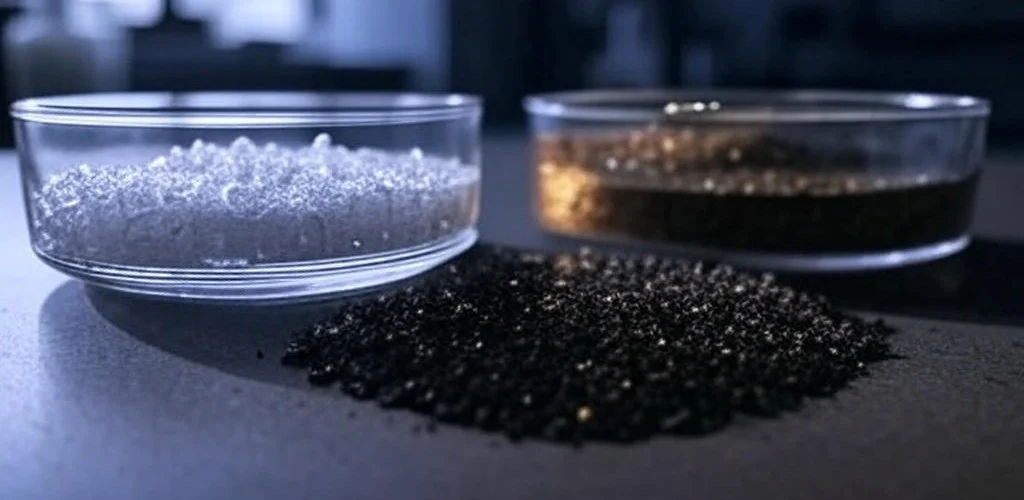
In industrial processes, selecting the right abrasive is key to achieving high-quality surface treatment, ensuring tool longevity, and optimizing costs. Electrocorundum and silicon carbide are among the most commonly used abrasives. Below, we present their characteristics, differences, and practical applications.
What is Electrocorundum?
Electrocorundum (Al₂O₃) is a synthetic abrasive material produced by melting bauxite. It is hard, wear-resistant, and versatile in various industrial applications.
Types:
- White Electrocorundum (WA) – ideal for precision machining of steels, tools, and alloys.
- Brown Electrocorundum (A) – suitable for processing steel, cast iron, and non-ferrous metals.
Example Applications:
- Production of grinding wheels (F46–F80)
- Blasting of steel structures
- Weld seam cleaning (F36–F60)
- Precision grinding of turbine and engine parts (F120–F220)
What is Silicon Carbide?
Silicon carbide (SiC) is an extremely hard material obtained from quartz sand and carbon. It is ideal for processing hard and brittle materials.
Types:
- Black SiC – for aggressive processing of cast iron, steel, and stone.
- Green SiC – for ultra-precise polishing of glass and ceramics.
Example Applications:
- Processing of pump housings and cast components
- Grinding of technical ceramics and laboratory glass
- Precision machining of turbine blades, titanium and nickel parts
- Polishing of PCBs and electronic components
Property Comparison
| Parameter | Electrocorundum | Silicon Carbide |
|---|---|---|
| Chemical Formula | Al₂O₃ | SiC |
| Hardness (Mohs scale) | ~9 | ~9.5 |
| Chemical Resistance | Medium | Very high |
| Temperature Resistance | ~2050°C | ~2730°C |
| Typical Grain Sizes | F24, F46, F80, F120 | F60, F100, F150, F240 |
Production and Standards
Electrocorundum is produced, among others, at the Abrasive Materials Plant in Zaporizhzhia and complies with FEPA, ISO, and GOST standards. Silicon carbide comes from renowned manufacturers in Italy, France, and China – e.g. Saint-Gobain, Ermak Abrasives.
Summary
Electrocorundum is a versatile abrasive for general applications. Silicon carbide excels in tasks requiring extreme hardness. The choice depends on the material being processed, technical requirements, and the goals of the operation.
Need help choosing the right material? Contact INGRITECH – we will advise you, select the right grit size, send samples, and help optimize your technological process.