

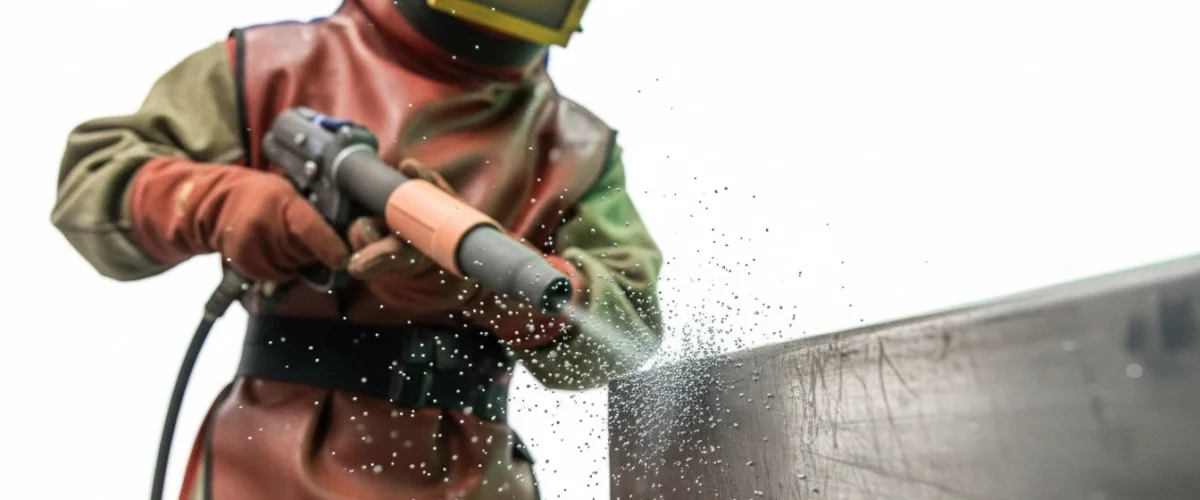
Abrasive Blasting Problems – Causes, Symptoms and Solutions
Abrasive blasting problems are very often caused not only by the quality of the abrasive media itself.
In practice, process costs are also affected by working pressure, system type, separator settings,
nozzle wear and the overall method of abrasive media use.
That is why, before blaming the media quality, it is worth analyzing the entire blasting process.
A good example is a situation in which 1 ton of material generates around
45–60 kg of dust after just one cycle. This means losses at the level of approximately
4.5–6%. For angular steel grit, this result is already a warning signal.
However, it does not necessarily mean that the abrasive media is defective, because in many cases it points instead
to overly aggressive operating settings, separation issues or naturally higher wear in an air blasting system.
Key symptom of abrasive blasting problems: excessive dust generation
If as much as 45–60 kg of dust remains after one cycle from 1 ton of abrasive media,
this indicates increased material consumption. The typical and acceptable loss range is usually around
20–40 kg per ton, or 2–4%. A level above 50 kg of dust per ton
means the process parameters should be checked carefully.
| Loss level | Per 1 ton | Assessment |
|---|---|---|
| 2–4% | 20–40 kg of dust | Typical range |
| 4.5–6% | 45–60 kg of dust | Warning signal |
| >6% | more than 60 kg of dust | Requires urgent diagnostics |
This result is not yet a critical anomaly, but it clearly shows that there are factors in the process
that accelerate abrasive grain breakdown.
Most common abrasive blasting problems in industrial processes
1. Excessive abrasive media consumption problem
Excessive abrasive media consumption is one of the most common issues seen in practice. It shows up as rapid
dust build-up, lower process efficiency and the need for more frequent media replacement.
2. Overly aggressive blasting parameters
One of the most likely causes of the problem is an excessively aggressive operating setup. If the system works
at 7–8 bar and with high air flow, angular steel grit wears out faster.
In this case, the grains hit with greater energy, which makes them more likely to fracture and turn into dust.
| Parameter | Impact on the process | Possible result |
|---|---|---|
| Pressure too high | Stronger grain impact | More dust and faster wear |
| High air flow | More aggressive blasting stream | Breakdown of the working fraction |
| Blasting time too long | More grain collisions | Higher material losses |
3. Air blasting vs turbine systems – impact on abrasive wear
In pressure blasting systems, meaning air blasting, abrasive media wear is usually higher than in turbine systems.
This is due to the less controlled nature of the impacts and the greater amount of self-breakdown of the abrasive grains in circulation.
4. Abrasive separation problems and incorrect settings
The separator has a major impact on process economics. If it works too aggressively, it may remove part of the usable
working fraction along with the dust. If it works too weakly, dust remains in circulation and accelerates the wear
of the next abrasive grains.
5. Nozzle wear and blasting equipment problems
A worn nozzle can worsen the blasting stream pattern and reduce blasting efficiency.
6. Unstable abrasive flow in blasting systems
If the abrasive media does not flow evenly, the operator will notice lower efficiency and unstable results.
7. Abrasive contamination issues
Contamination such as rust, paint or oil can significantly reduce blasting quality.
8. Fine particle deposition during abrasive blasting
Fine particles may settle on the surface and affect coating or finishing processes.
9. Dust collection problems in abrasive blasting
Poor dust extraction increases wear, reduces visibility and affects process stability.
10. Incorrect abrasive usage model
Single-use abrasive models significantly increase cost and reduce efficiency.
Does every abrasive blasting problem mean poor media quality?
Not necessarily. Most issues are related to process settings rather than material defects.
How to diagnose abrasive blasting problems correctly
- check grain size distribution
- measure fine fraction
- inspect separator
- verify pressure and airflow
- compare with other abrasive
Main causes of abrasive blasting problems – conclusions
- aggressive pressure
- air blasting system
- separator issues
- equipment wear
A proper diagnosis helps reduce dust, extend abrasive life and optimize costs.